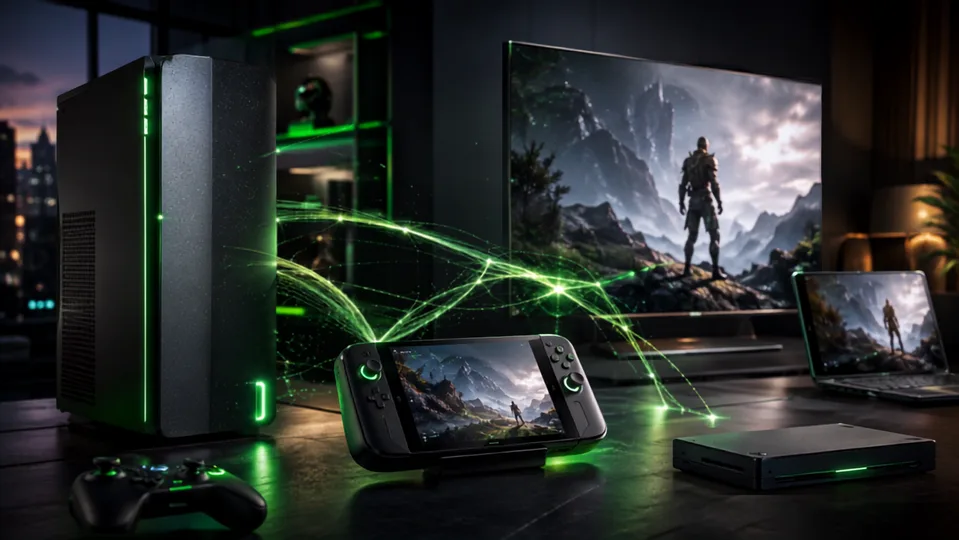
Project Helix is back in the spotlight after Xbox CEO Asha Sharma described the next generation as a family of devices. That renewed attention has also revived one of the biggest questions around Microsoft’s hardware plan: when Xbox says Helix will play PC games, does that mean players will be able to use stores such as Steam or the Epic Games Store?
The confirmed part is important. At GDC 2026, Xbox said Project Helix is designed to play both Xbox console games and PC games. Microsoft also said the first-party console is being built around a custom AMD system-on-chip, with the next generation of DirectX and FSR technology, and that alpha hardware is planned to reach developers beginning in 2027.
What Microsoft has not confirmed is equally important. Xbox has not said that the retail Helix hardware will let players install Steam, Epic Games Store, GOG or any other named third-party PC storefront. The phrase PC games confirms a category of software support, not a specific store or distribution model.
That distinction matters because the current Xbox strategy is becoming much more Windows-like. Xbox Mode on Windows 11 provides a controller-focused, full-screen gaming interface while still allowing users to switch back to the Windows desktop. Microsoft has also said players should be able to access games across devices through purchases, subscriptions and other leading storefronts.
Those Windows features make an open-storefront Helix plausible, but they do not make it official. Microsoft could expose multiple PC stores on Helix, curate only selected PC games through its own ecosystem, or use a different model entirely. Until Xbox names the supported stores, calling Helix a Steam console goes beyond what the company has actually announced.
The uncertainty is already driving discussion among Xbox and PC players. Reddit threads about Helix repeatedly focus on whether Steam and Epic access would make the device more attractive than a traditional console, and whether a PC-style software model could eventually change expectations around paid online multiplayer. Those are useful signs of what players care about, but they remain community speculation rather than product commitments.
Microsoft has given more concrete detail about the hardware foundation. Project Helix uses a custom AMD SoC and is being designed for a major increase in ray-tracing capability, with intelligence integrated into graphics and compute workloads. Xbox has also promised continued compatibility with games from four generations of Xbox hardware.
The wider Xbox ecosystem is already moving in the same direction. Xbox Play Anywhere now spans more than 1,500 games, while Microsoft is trying to make purchases and progress travel more easily between console and Windows devices. A Helix machine that genuinely combines Xbox compatibility with PC software could be the strongest expression of that strategy yet.
For now, the clean takeaway is simple: PC-game support on Project Helix is confirmed, but Steam, Epic and GOG support are not. The recent family-of-devices announcement makes the question even more interesting, because different Helix products could ultimately offer different levels of openness. Until Microsoft explains the retail software model, that part of the next Xbox remains unresolved.