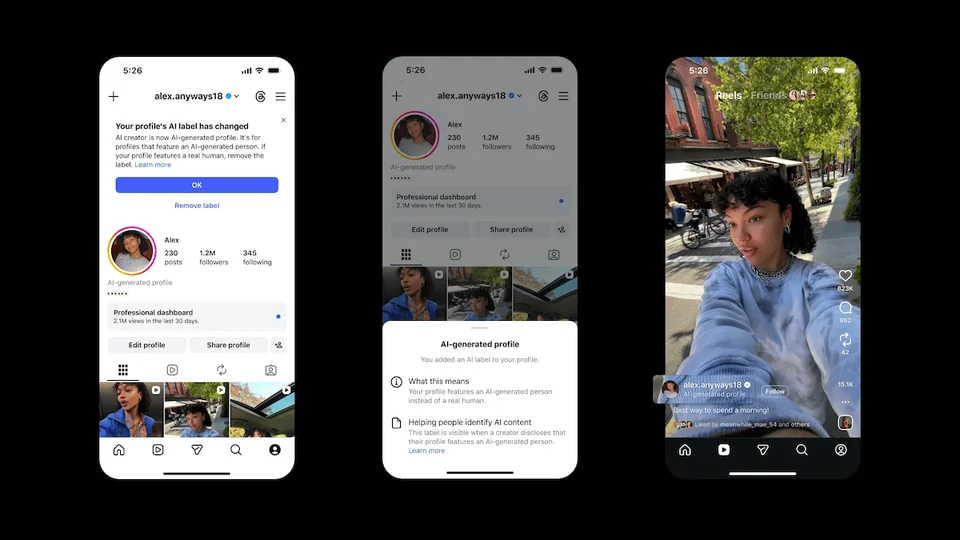
Instagram wants its AI labels to make synthetic media easier to understand. For some photographers, the result is doing the opposite. Creators are reporting that genuine photos are being marked with AI-related labels even when the image itself was captured with a camera.
The issue appears to be tied to the increasingly blurry line between generative AI and ordinary editing tools. A photographer can shoot a real image, make routine adjustments in modern software and still leave behind metadata or processing signals that a platform may interpret as AI involvement.
That distinction matters because most people do not read an AI badge as a technical note about one editing step. They read it as a warning that the image may have been generated. For a photographer whose reputation depends on making real images, that can change how the work is perceived before anyone even opens the caption.
The problem is not the idea of disclosure. Social platforms need a way to give people useful context as generated images become harder to identify by eye. The problem is whether one broad label can explain the difference between a fully synthetic picture and a real photograph that used an AI-assisted cleanup or editing feature.
That puts creators in an awkward position. Modern photo software increasingly mixes traditional tools with machine-learning features, often without making the boundary obvious to the person using them. A platform can therefore end up treating a normal editing workflow as evidence that the finished image belongs in the same bucket as generative art.
For Instagram, the challenge is now about trust as much as detection. A transparency label only works when users understand what it means and creators believe it is being applied accurately. Until that improves, an AI label should be read as a sign that some automated or AI-assisted processing may have been detected, not automatic proof that the entire image was generated.