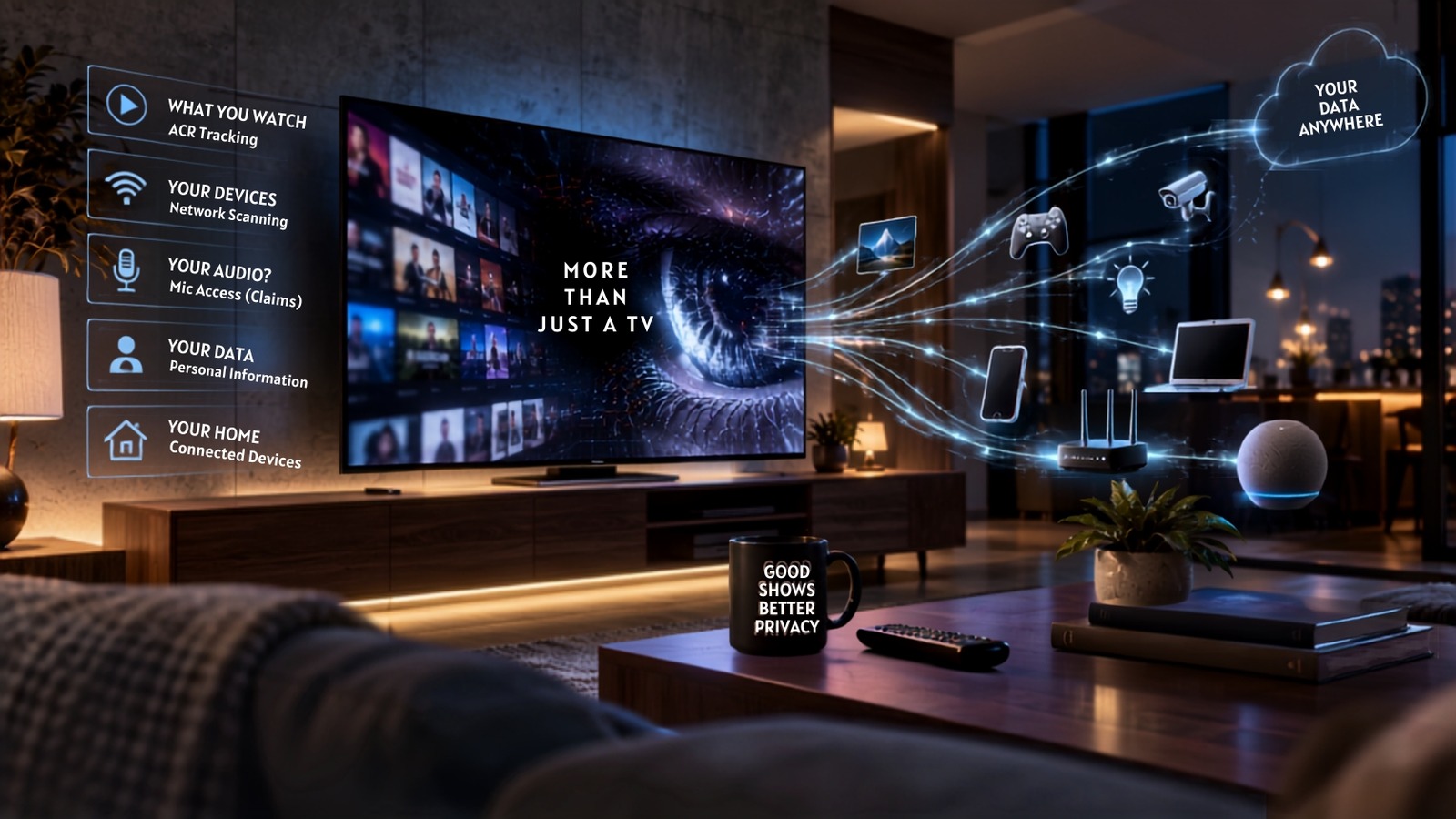
LG smart TV privacy is under fresh scrutiny after a new investigation raised questions about how much data a television can collect inside the home. Some of the concerns are familiar, like viewing-data tracking. Others are more serious, including claims about local network scanning and microphone behavior while a TV appears to be off.
The important part is separating what LG officially documents from what researchers say they uncovered. Those are not the same thing.
What LG officially says it collects
LG's privacy policies explain that its connected services can collect personal information and usage data. Smart TVs also use technologies such as Automatic Content Recognition, or ACR, which can identify what is playing on screen and turn that information into viewing data.
ACR is not unique to LG. It is common across the smart TV industry and is generally used for advertising, analytics and content recommendations. The privacy issue comes down to how clearly users are told about it and how easy it is to opt out.
What the new investigation claims
The latest investigation goes further. Researchers reported that tested LG TVs probed devices on the local network and found behavior they say could expose more information than most owners would expect from a television.
They also raised concerns about microphone access in standby-like conditions. Those findings are significant, but they should still be treated as researcher claims rather than settled facts until LG responds in detail or independent testing confirms them.
Why ACR keeps coming up
ACR has already attracted regulatory attention. Earlier this year, Texas announced an agreement with LG over viewing-data practices that required clearer disclosures and opt-out controls. That does not prove every claim in the new investigation, but it shows why smart TV tracking is already a live privacy issue.
What LG TV owners can do now
Owners who want less tracking can start by reviewing privacy and advertising settings, disabling viewing-information or ACR-related options where available, and checking microphone or voice features they do not use. Menu names vary by model and webOS version.
It is also worth reviewing connected-device permissions on the home network and keeping the TV software updated. None of that proves your TV is spying on you, but it reduces the amount of unnecessary data collection and exposure.
What is still unconfirmed
The most dramatic claims in this story are still the least settled. LG documents data collection and ACR use, but claims about standby audio capture and broader network behavior come from the new technical investigation. Until LG addresses those findings directly, they should not be presented as universal behavior across every LG smart TV.